

mnmazda
Administrator
Can I Borrow Your Homework?
Automakers have been borrowing from one another for as long as the industry has existed. It’s like a bazaar of automotive goodwill; routinely, manufacturers share engines, platforms, transmissions, manufacturing facilities, and sometimes entire vehicles. In a time where business is becoming more of a global affair, agreements between marques and manufacturers can help automakers experiment in a new market, reduce development costs, or fill a gap in their model lineups without dropping major cash by building a whole new car from scratch.
This practice is known as badge engineering, a phenomenon that occurs when a vehicle is sold under different brands, often with relatively modest changes to its appearance and equipment. It has produced forgettable cars, but it has also created some notable creations. GM’s full-size SUVs; the Chevrolet Suburban, GMC Yukon and Cadillac Escalade, all share bodyshells and powertrains. Toyota and Subaru’s partnership has produced many identical vehicles, including the bZ Woodland and Tailseeker EVs, as well as the rear-drive GR86 and BRZ sports cars.
However, there are some rebadged vehicles whose identities evolved in unexpected ways once they wore a different emblem. These five stories show that when a vehicle moves between brands, it can become much more than a corporate cost-saving exercise.
Honda
View the 1 images of this gallery on the original article
Honda Passport
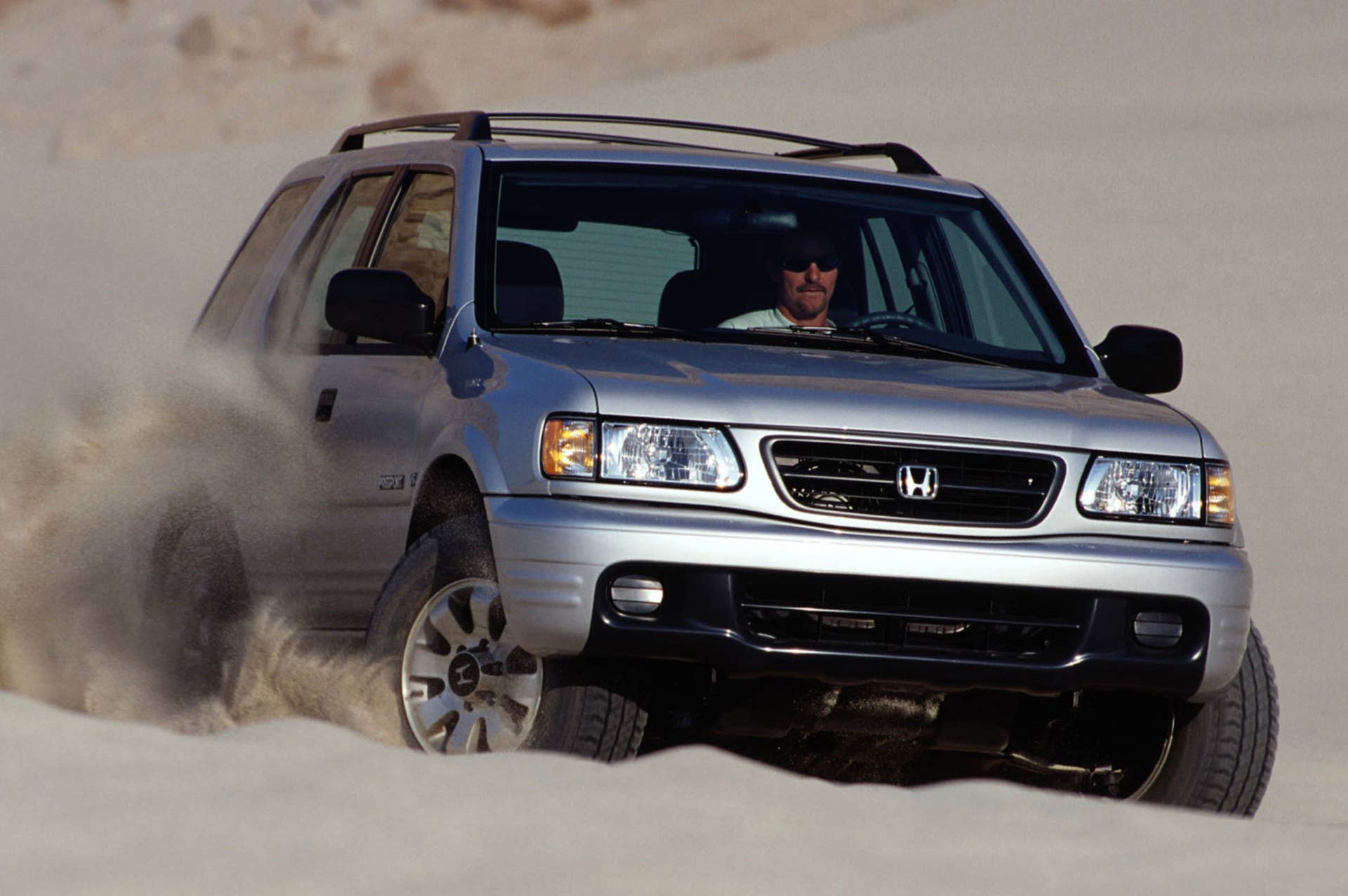
The Honda Passport occupies a unique place in the company’s history. Today’s Passport is a midsize SUV designed and engineered as a Honda product, but the name originally appeared on a very different vehicle: an Isuzu wearing a Honda badge. Introduced for the 1994 model year in the United States, the original Passport represented Honda’s entry into the growing SUV market. At the time, Honda had a strong reputation for passenger cars, but it lacked the kind of rugged, body-on-frame SUV that American buyers were increasingly demanding and developing one from scratch would have required a major investment.
Isuzu already had the necessary vehicle. Its Rodeo offered the truck-based architecture, available four-wheel drive, and practical proportions Honda needed. The companies struck a deal, and Honda sold the Rodeo as the Passport, initially offering a choice of four-cylinder and V-6 powertrains depending on trim and model year. Through this arrangement, Honda gained a competitive SUV without developing something entirely new, while Isuzu benefited from an additional sales channel. The Passport gave Honda dealers a way to participate in a segment that was becoming increasingly important to American consumers.
But gradually, the Passport gained an identity and its own place in Honda’s lineup. A second generation arrived for the 1998 model year, under the Isuzu relationship, giving it updated styling and engineering. The name disappeared after the 2002 model year, leaving Honda without a Passport for more than a decade. By then, however, SUVs had become central to the American market, and Honda had developed its own vehicles, like the CR-V and Pilot.
In 2019, the Passport returned, but this time, it was a genuine Honda product. Positioned between the CR-V and Pilot, this new Passport was made for buyers who wanted a more adventure-oriented alternative to a conventional family crossover. The revived name also drew a connection to the original’s outdoorsy mission. Later generations gave it enhanced trail capability, increased ground clearance and rugged TrailSport trims.
Ronan Glon
Maserati MC12
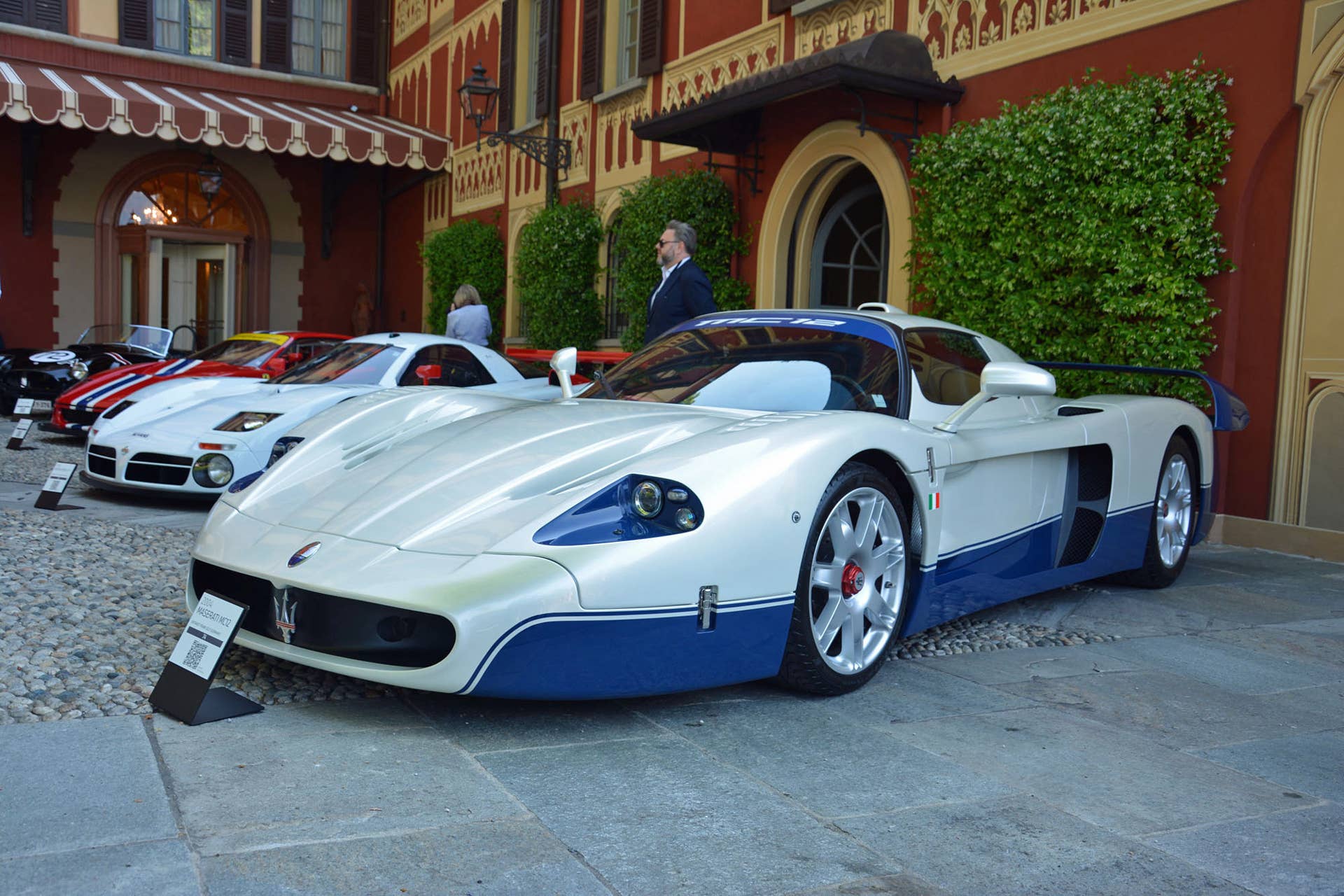
The Maserati MC12 is one of the most unusual products to emerge from the relationship between two legendary Italian performance car brands. It shared substantial engineering DNA with the Ferrari Enzo, but it was developed with a distinct purpose: to reestablish Maserati as a serious competitor in international GT racing. By the early 2000s, Maserati was undergoing a period of transformation. It had a rich racing heritage, but it had spent years focusing primarily on road cars. Ferrari, which took control of Maserati in the late 1990s, offered an opportunity to share technical resources and bring the marque back into actual racing.
The MC12 emerged from that relationship in 2004. Its architecture and naturally aspirated 6.0-liter V-12 were closely related to the Ferrari Enzo’s, but the Maserati was not just a simple rebadge job. The resulting Trident had reworked bodywork that included a long rear section and a removable roof panel, and was developed to satisfy the homologation requirements of the FIA GT Championship. The road-going MC12 was built in limited numbers through 2004 and 2005, and its rarity and striking appearance made it an instant collector’s item.
However, its real history was tied to what it did on track. The MC12 GT1 gave Maserati a platform for a serious international racing campaign. The MC12 GT1 became a successful competitor in the FIA GT Championship, earning multiple championship titles and establishing Maserati as a formidable force in GT racing during the 2000s. Through the racing program, Maserati had something more than a halo car. The MC12 helped reconnect the brand with its true heritage and showed that it could still build a car capable of winning against contemporary rivals.
The Ferrari relationship was essential, but the MC12 also benefited from being recognizably a Maserati. Its design, proportions, and presentation distinguished it from the Enzo, while its competition achievements gave it a story that stood independently of its shared mechanical foundations. The MC12 remains one of Maserati’s most significant modern cars not because it escaped its Ferrari origins, but because it became something much cooler.
Toyota Cavalier
The Toyota Cavalier sounds like a car that should not exist. Toyota is a company that is synonymous with the best of Japanese automotive engineering, as demonstrated in models like the Corolla, Camry, Prius and Land Cruiser, among others. Meanwhile, the Chevrolet Cavalier was an ordinary American compact car built by General Motors to compete on price, practicality and not much else.
In 1995, the Toyota Cavalier was introduced in Japan as part of a broader arrangement between GM and Toyota. By then, the two automakers have had a long history of cooperation, most notably through New United Motor Manufacturing, Inc., or NUMMI, the California joint venture that began producing vehicles in 1984. The partnership gave Toyota experience in American manufacturing while allowing GM to learn from Toyota’s production methods. The Cavalier arrangement took the relationship in the opposite direction: an American-built Chevy sold through Toyota’s Japanese dealer network.
This was truly a product of the time it was made. In the 1980s and into the 90s, Japanese automakers were under pressure by American political interests to address trade imbalances and demonstrate greater openness to imported American vehicles. By offering the Cavalier as a Toyota, GM was able to coyly sneak into the Japanese market. The JDM Cavalier was based on the Chevy sold in America, save for Toyota badging and some market-specific changes to make it more appealing to the Japanese market.
But, this didn’t mean that the Toyota Cavalier was a sales success. To put things short, Americans and the Japanese have different regulatory ideas of what makes a compact car, and the Cavalier exceeded the Japanese government’s maximum size and displacement dimensions. Combined with strong domestic competition and a Japanese public that didn’t think American-built cars were well-made, Toyota eventually ended the program in 2000.
Ford Probe
In 1979, Ford dramatically increased its stake in Japanese automaker Mazda from 7% to 24.5%, in an effort to expand its reach in the Asia-Pacific region and to save the then-ailing automaker from difficulties experienced during the oil crisis. By this time, the two had partnered with each other to sell various products, including pickup trucks and small sedans under the Ford badge.
The Probe arrived for the 1989 model year as a replacement for the Ford EXP and a potential successor to the Mustang’s traditional role as a compact sporty coupe. Initially, they proposed a front-wheel-drive Mustang developed with Mazda, but Mustang loyalists were resistant to the idea of replacing the nameplate’s rear-wheel-drive identity with a front-drive car. After significant backlash from Mustang owners, Ford ultimately retained the Mustang as a rear-wheel-drive model and launched the new front-wheel-drive coupe as the Probe instead.
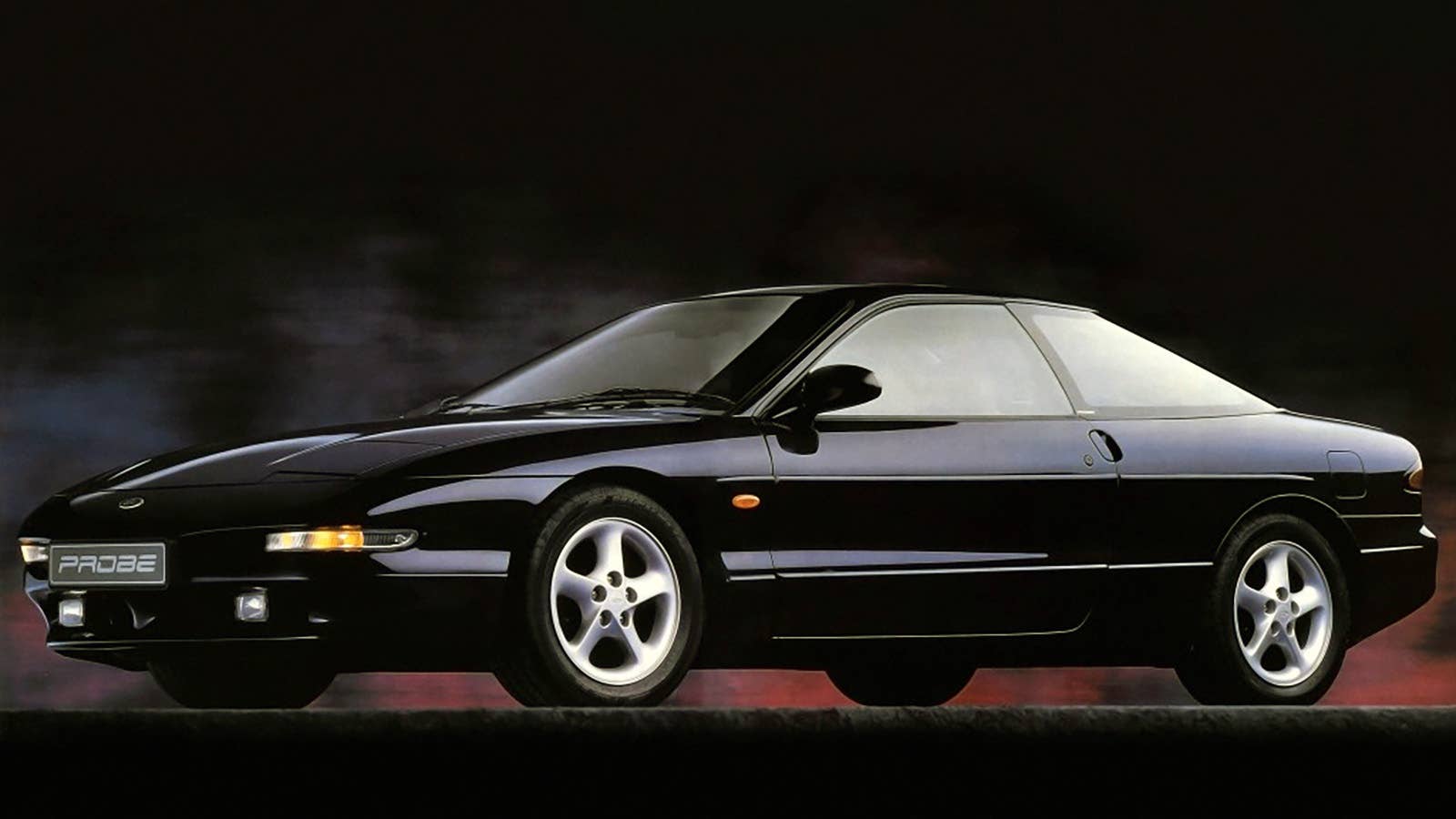
The first-generation Probe shared its platform and much of its engineering with the Mazda MX-6 and 626. It featured a sleek, aerodynamic shape that reflected late-1980s styling trends, including pop-up headlights, a sloping nose, and a rounded roofline. Its proportions were very different from those of the Mustang, signaling that Ford was pursuing a different kind of sporty car. In 1993, Ford introduced the second generation Probe, which continued the Mazda connection while receiving a more distinctive body and new engines. The available V6 engine gave the Probe GT a stronger performance identity, while its front-wheel-drive architecture and aerodynamic design made it feel very different from traditional American pony cars.
While the car carried an unusual cultural burden due to being connected to plans for a front-wheel-drive Mustang, some enthusiasts viewed it through the lens of what it might have been rather than what it actually was. That controversy made it difficult for the Probe to establish itself as an entirely independent performance-car identity. Even so, the Probe deserves a place in the history of Ford’s sporting models. It offered an alternative to the Mustang, appealed to buyers looking for a more modern and aerodynamic coupe, and showcased the benefits of Ford’s relationship with Mazda.
Geo Prizm
The Geo Prizm may be the most successful example on this list of a shared vehicle developing an actual identity under another brand. Sold in the United States under General Motors’ Geo marque, the Prizm was closely related to the Toyota Corolla and was built through the GM-Toyota NUMMI joint venture in California. Geo was introduced for the 1989 model year as a brand aimed at buyers seeking affordable, fuel-efficient small cars. GM wanted to compete against the Japanese imports, and its partnership with Toyota offered a way to combine Japanese engineering with American manufacturing and distribution.
The Prizm was central to that strategy. It shared much of its bones with a version of the Toyota Corolla called the Sprinter, but it was sold through Chevy dealers as a Geo. This arrangement gave GM a small sedan without developing a whole new platform. For customers, the appeal was straightforward. The Prizm offered practical transportation, modest running costs, and the kind of reliability associated with its Toyota engineering. It was available as a sedan and, in early versions, a hatchback, and it competed in a market where affordability and dependability often mattered more than performance or luxury.
As a factory, NUMMI was important beyond the Prizm itself, as it helped revitalize what was then GM’s most troubled plant. The partnership with Toyota allowed GM workers to study and incorporate Japanese production techniques at an American plant, which helped the joint venture became a landmark in the history of the American auto industry. When GM discontinued the Geo marque prior to the 1998 model year, the car became the Chevrolet Prizm, and still retained its Toyota-related foundations while moving under the Chevrolet badge. The model continued into the early 2000s before being discontinued.
When a badge changes the story
These five cars demonstrate that rebadging is not one single phenomenon. Sometimes it gives an automaker access to an entirely new segment. Sometimes it creates an unusual international experiment. Sometimes it gives a brand a platform for racing success. And sometimes it provides the foundation for a nameplate that survives long after the original partnership has ended.
After it sold extremely well, Honda took the borrowed identity of the Passport and flipped it into something new. The Maserati MC12 paved the way for a racing legacy that the trident brand reclaimed, while the Toyota Cavalier and Geo Prizm, meanwhile, captured the complicated relationship between American and Japanese automakers. A shared platform does not automatically make one car a copy of another, and a model’s reputation can be shaped as much by what it was expected to be as by what it actually became.
Ultimately, a badge can influence how a car is perceived, where it is sold, and who considers buying it. But it cannot erase the engineering, compromises, and history beneath the surface. Sometimes a rebadged car is just a car, but sometimes they become symbols of a bridge between companies, a turning point in a manufacturer’s history, or an unexpected icon in its own right. The stories begin when the new badge gives the old car a life its original creators never quite anticipated.
Continue reading...
Automakers have been borrowing from one another for as long as the industry has existed. It’s like a bazaar of automotive goodwill; routinely, manufacturers share engines, platforms, transmissions, manufacturing facilities, and sometimes entire vehicles. In a time where business is becoming more of a global affair, agreements between marques and manufacturers can help automakers experiment in a new market, reduce development costs, or fill a gap in their model lineups without dropping major cash by building a whole new car from scratch.
This practice is known as badge engineering, a phenomenon that occurs when a vehicle is sold under different brands, often with relatively modest changes to its appearance and equipment. It has produced forgettable cars, but it has also created some notable creations. GM’s full-size SUVs; the Chevrolet Suburban, GMC Yukon and Cadillac Escalade, all share bodyshells and powertrains. Toyota and Subaru’s partnership has produced many identical vehicles, including the bZ Woodland and Tailseeker EVs, as well as the rear-drive GR86 and BRZ sports cars.
However, there are some rebadged vehicles whose identities evolved in unexpected ways once they wore a different emblem. These five stories show that when a vehicle moves between brands, it can become much more than a corporate cost-saving exercise.
Honda
View the 1 images of this gallery on the original article
Honda Passport
The Honda Passport occupies a unique place in the company’s history. Today’s Passport is a midsize SUV designed and engineered as a Honda product, but the name originally appeared on a very different vehicle: an Isuzu wearing a Honda badge. Introduced for the 1994 model year in the United States, the original Passport represented Honda’s entry into the growing SUV market. At the time, Honda had a strong reputation for passenger cars, but it lacked the kind of rugged, body-on-frame SUV that American buyers were increasingly demanding and developing one from scratch would have required a major investment.
Isuzu already had the necessary vehicle. Its Rodeo offered the truck-based architecture, available four-wheel drive, and practical proportions Honda needed. The companies struck a deal, and Honda sold the Rodeo as the Passport, initially offering a choice of four-cylinder and V-6 powertrains depending on trim and model year. Through this arrangement, Honda gained a competitive SUV without developing something entirely new, while Isuzu benefited from an additional sales channel. The Passport gave Honda dealers a way to participate in a segment that was becoming increasingly important to American consumers.
But gradually, the Passport gained an identity and its own place in Honda’s lineup. A second generation arrived for the 1998 model year, under the Isuzu relationship, giving it updated styling and engineering. The name disappeared after the 2002 model year, leaving Honda without a Passport for more than a decade. By then, however, SUVs had become central to the American market, and Honda had developed its own vehicles, like the CR-V and Pilot.
In 2019, the Passport returned, but this time, it was a genuine Honda product. Positioned between the CR-V and Pilot, this new Passport was made for buyers who wanted a more adventure-oriented alternative to a conventional family crossover. The revived name also drew a connection to the original’s outdoorsy mission. Later generations gave it enhanced trail capability, increased ground clearance and rugged TrailSport trims.
Ronan Glon
Maserati MC12
The Maserati MC12 is one of the most unusual products to emerge from the relationship between two legendary Italian performance car brands. It shared substantial engineering DNA with the Ferrari Enzo, but it was developed with a distinct purpose: to reestablish Maserati as a serious competitor in international GT racing. By the early 2000s, Maserati was undergoing a period of transformation. It had a rich racing heritage, but it had spent years focusing primarily on road cars. Ferrari, which took control of Maserati in the late 1990s, offered an opportunity to share technical resources and bring the marque back into actual racing.
The MC12 emerged from that relationship in 2004. Its architecture and naturally aspirated 6.0-liter V-12 were closely related to the Ferrari Enzo’s, but the Maserati was not just a simple rebadge job. The resulting Trident had reworked bodywork that included a long rear section and a removable roof panel, and was developed to satisfy the homologation requirements of the FIA GT Championship. The road-going MC12 was built in limited numbers through 2004 and 2005, and its rarity and striking appearance made it an instant collector’s item.
However, its real history was tied to what it did on track. The MC12 GT1 gave Maserati a platform for a serious international racing campaign. The MC12 GT1 became a successful competitor in the FIA GT Championship, earning multiple championship titles and establishing Maserati as a formidable force in GT racing during the 2000s. Through the racing program, Maserati had something more than a halo car. The MC12 helped reconnect the brand with its true heritage and showed that it could still build a car capable of winning against contemporary rivals.
The Ferrari relationship was essential, but the MC12 also benefited from being recognizably a Maserati. Its design, proportions, and presentation distinguished it from the Enzo, while its competition achievements gave it a story that stood independently of its shared mechanical foundations. The MC12 remains one of Maserati’s most significant modern cars not because it escaped its Ferrari origins, but because it became something much cooler.
Toyota Cavalier
The Toyota Cavalier sounds like a car that should not exist. Toyota is a company that is synonymous with the best of Japanese automotive engineering, as demonstrated in models like the Corolla, Camry, Prius and Land Cruiser, among others. Meanwhile, the Chevrolet Cavalier was an ordinary American compact car built by General Motors to compete on price, practicality and not much else.
In 1995, the Toyota Cavalier was introduced in Japan as part of a broader arrangement between GM and Toyota. By then, the two automakers have had a long history of cooperation, most notably through New United Motor Manufacturing, Inc., or NUMMI, the California joint venture that began producing vehicles in 1984. The partnership gave Toyota experience in American manufacturing while allowing GM to learn from Toyota’s production methods. The Cavalier arrangement took the relationship in the opposite direction: an American-built Chevy sold through Toyota’s Japanese dealer network.
This was truly a product of the time it was made. In the 1980s and into the 90s, Japanese automakers were under pressure by American political interests to address trade imbalances and demonstrate greater openness to imported American vehicles. By offering the Cavalier as a Toyota, GM was able to coyly sneak into the Japanese market. The JDM Cavalier was based on the Chevy sold in America, save for Toyota badging and some market-specific changes to make it more appealing to the Japanese market.
But, this didn’t mean that the Toyota Cavalier was a sales success. To put things short, Americans and the Japanese have different regulatory ideas of what makes a compact car, and the Cavalier exceeded the Japanese government’s maximum size and displacement dimensions. Combined with strong domestic competition and a Japanese public that didn’t think American-built cars were well-made, Toyota eventually ended the program in 2000.
Ford Probe
In 1979, Ford dramatically increased its stake in Japanese automaker Mazda from 7% to 24.5%, in an effort to expand its reach in the Asia-Pacific region and to save the then-ailing automaker from difficulties experienced during the oil crisis. By this time, the two had partnered with each other to sell various products, including pickup trucks and small sedans under the Ford badge.
The Probe arrived for the 1989 model year as a replacement for the Ford EXP and a potential successor to the Mustang’s traditional role as a compact sporty coupe. Initially, they proposed a front-wheel-drive Mustang developed with Mazda, but Mustang loyalists were resistant to the idea of replacing the nameplate’s rear-wheel-drive identity with a front-drive car. After significant backlash from Mustang owners, Ford ultimately retained the Mustang as a rear-wheel-drive model and launched the new front-wheel-drive coupe as the Probe instead.
The first-generation Probe shared its platform and much of its engineering with the Mazda MX-6 and 626. It featured a sleek, aerodynamic shape that reflected late-1980s styling trends, including pop-up headlights, a sloping nose, and a rounded roofline. Its proportions were very different from those of the Mustang, signaling that Ford was pursuing a different kind of sporty car. In 1993, Ford introduced the second generation Probe, which continued the Mazda connection while receiving a more distinctive body and new engines. The available V6 engine gave the Probe GT a stronger performance identity, while its front-wheel-drive architecture and aerodynamic design made it feel very different from traditional American pony cars.
While the car carried an unusual cultural burden due to being connected to plans for a front-wheel-drive Mustang, some enthusiasts viewed it through the lens of what it might have been rather than what it actually was. That controversy made it difficult for the Probe to establish itself as an entirely independent performance-car identity. Even so, the Probe deserves a place in the history of Ford’s sporting models. It offered an alternative to the Mustang, appealed to buyers looking for a more modern and aerodynamic coupe, and showcased the benefits of Ford’s relationship with Mazda.
Geo Prizm
The Geo Prizm may be the most successful example on this list of a shared vehicle developing an actual identity under another brand. Sold in the United States under General Motors’ Geo marque, the Prizm was closely related to the Toyota Corolla and was built through the GM-Toyota NUMMI joint venture in California. Geo was introduced for the 1989 model year as a brand aimed at buyers seeking affordable, fuel-efficient small cars. GM wanted to compete against the Japanese imports, and its partnership with Toyota offered a way to combine Japanese engineering with American manufacturing and distribution.
The Prizm was central to that strategy. It shared much of its bones with a version of the Toyota Corolla called the Sprinter, but it was sold through Chevy dealers as a Geo. This arrangement gave GM a small sedan without developing a whole new platform. For customers, the appeal was straightforward. The Prizm offered practical transportation, modest running costs, and the kind of reliability associated with its Toyota engineering. It was available as a sedan and, in early versions, a hatchback, and it competed in a market where affordability and dependability often mattered more than performance or luxury.
As a factory, NUMMI was important beyond the Prizm itself, as it helped revitalize what was then GM’s most troubled plant. The partnership with Toyota allowed GM workers to study and incorporate Japanese production techniques at an American plant, which helped the joint venture became a landmark in the history of the American auto industry. When GM discontinued the Geo marque prior to the 1998 model year, the car became the Chevrolet Prizm, and still retained its Toyota-related foundations while moving under the Chevrolet badge. The model continued into the early 2000s before being discontinued.
When a badge changes the story
These five cars demonstrate that rebadging is not one single phenomenon. Sometimes it gives an automaker access to an entirely new segment. Sometimes it creates an unusual international experiment. Sometimes it gives a brand a platform for racing success. And sometimes it provides the foundation for a nameplate that survives long after the original partnership has ended.
After it sold extremely well, Honda took the borrowed identity of the Passport and flipped it into something new. The Maserati MC12 paved the way for a racing legacy that the trident brand reclaimed, while the Toyota Cavalier and Geo Prizm, meanwhile, captured the complicated relationship between American and Japanese automakers. A shared platform does not automatically make one car a copy of another, and a model’s reputation can be shaped as much by what it was expected to be as by what it actually became.
Ultimately, a badge can influence how a car is perceived, where it is sold, and who considers buying it. But it cannot erase the engineering, compromises, and history beneath the surface. Sometimes a rebadged car is just a car, but sometimes they become symbols of a bridge between companies, a turning point in a manufacturer’s history, or an unexpected icon in its own right. The stories begin when the new badge gives the old car a life its original creators never quite anticipated.
Continue reading...